 KA
KA EN
EN RU
RU

 Back to Blog
 June 20, 2026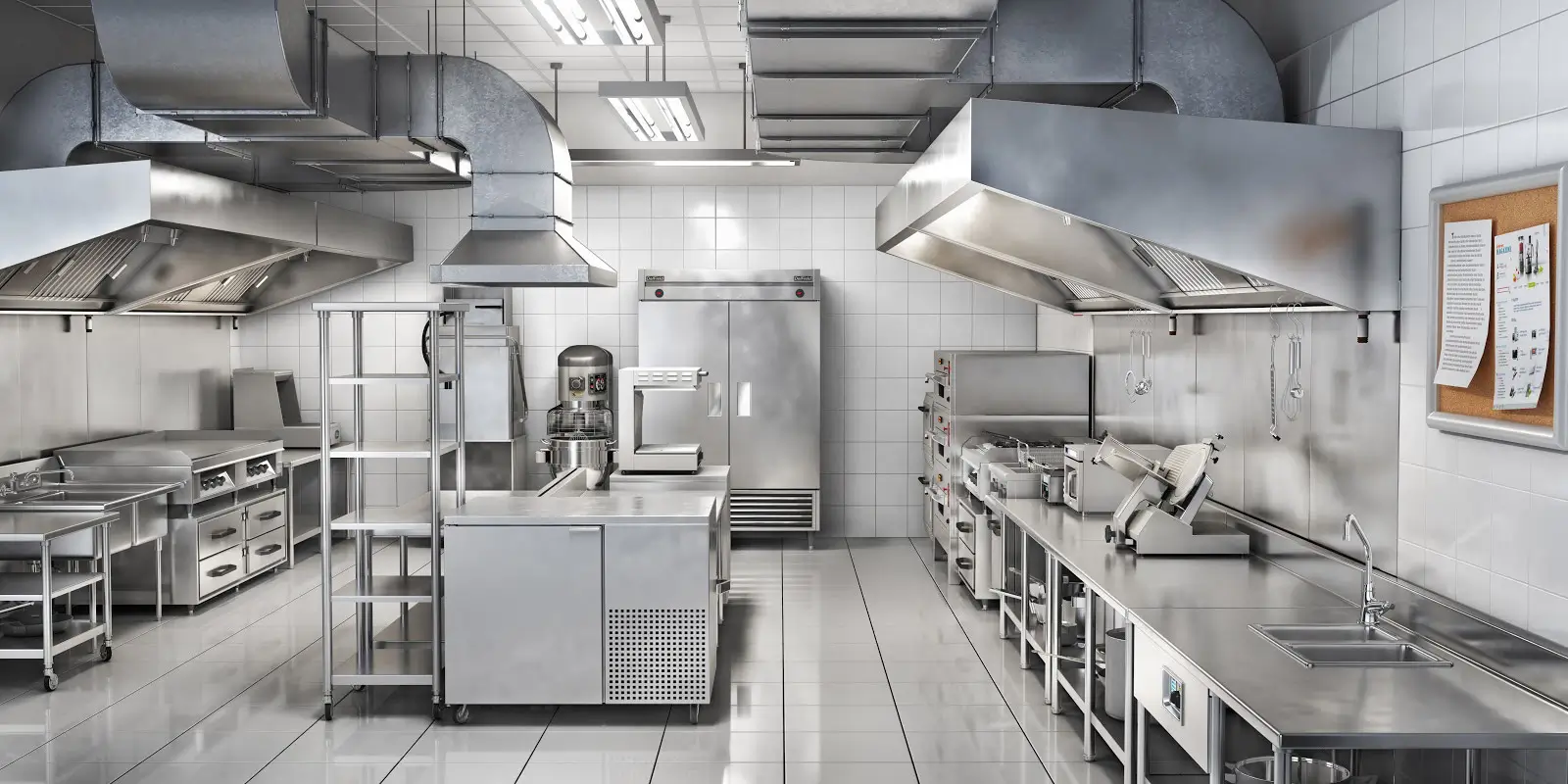
One of the key determinants of success in the modern food industry and HoReCa sector is a properly planned and equipped workspace with the highest quality inventory. A professional kitchen is a complex, high-load mechanism, where every detail – from the surface material to the arrangement of shelves – has a direct impact on productivity, sanitary safety and business profitability.
GN Industrial (gn.ge) offers its customers a full range of stainless steel (so-called “Nerzhavaiki”) industrial inventory. This article is an in-depth guide that will help you properly assess the needs of your facility, understand the technical characteristics of various equipment, and make an informed investment decision.
1. Materials Science: Why is stainless steel the only alternative?
The use of standard, household materials (wood, plastic, enameled metal) in industrial kitchens is categorically unacceptable according to international HACCP (Hazard Analysis and Critical Control Points) standards. Stainless steel is the only rational choice due to several critical factors:
- High resistance to corrosion: The kitchen is constantly exposed to high humidity, acidic environments (for example, citrus juice, vinegar, tomatoes) and aggressive detergents. The chromium content in steel creates an invisible protective oxide layer that protects the metal from rusting.
- Hygiene and bacteriological safety: Stainless steel has a non-porous surface. Unlike wood or plastic, it does not accumulate food residues and does not multiply microorganisms. It can be disinfected with high temperatures and chemical solutions.
- Mechanical strength and thermal stability: Industrial stainless steel can withstand heavy physical impacts (which are common when processing meat or placing heavy pots) and extreme temperature changes without deformation.
When selecting equipment, it is important to pay attention to the thickness and grade of the metal (mainly AISI 304 or AISI 430 steel is used, where 304 is distinguished by higher corrosion resistance due to its nickel content).
2. Space zoning and ergonomics
Designing a professional kitchen begins with zoning. To prevent cross-contamination, it is necessary that the trajectories of movement of raw products and ready-made dishes do not intersect. Accordingly, inventory should be distributed in the following zones:
- Receiving and storage: Product entry area where sturdy shelving and carts are required.
- Pre-processing: Clean and rough processing areas for meat, fish and vegetables. These include sturdy workbenches with shelves and specialized sinks.
- Hotline (Preparation): An area of ovens, grills, and pizza machines that requires heat-resistant stands.
- Service and serving: Tables for serving food, where cleanliness and speed are important.
- Laundry area: An isolated space with deep sinks, dishwashers, and drying racks.
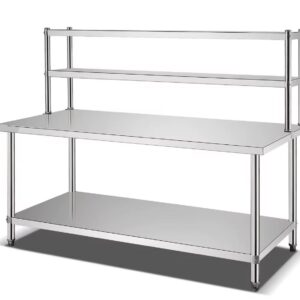
Work table 120X60X85
Code: GN10368
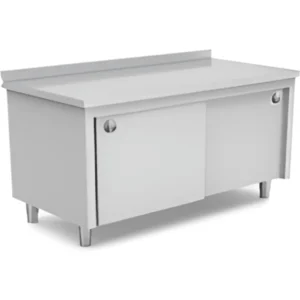
Work Table 160x60x85cm
Code: 1480
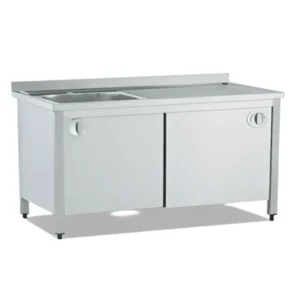
Work Table with Sink 140x60x85cm
Code: GN20ST0617
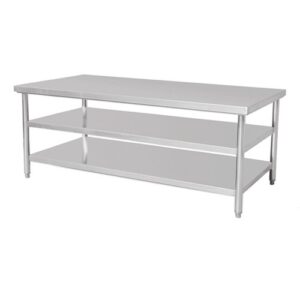
Work Table + 2 Shelves 1200x700x850
Code: GN10287
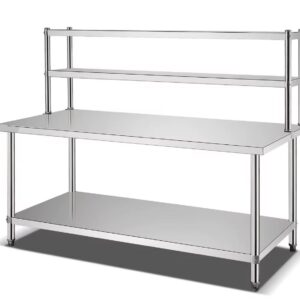
Work table 150X70X85
Code: GN10374
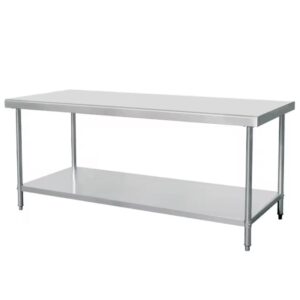
Work table + shelf 150X70X85
Code: GN10365
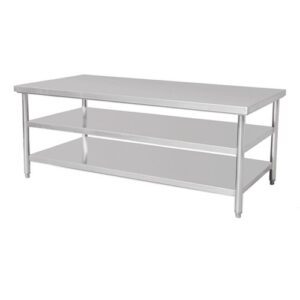
Work Table + 2 Shelves 2000x700x850
Code: GN10300

Work Table + Shelf 1000x600x850
Code: GN10283
3. Industrial Workbenches: Classification and Technical Analysis
The worktop is the backbone of a professional kitchen. The GN Industrial catalog presents models of various configurations, which should be selected based on the specific purpose.
3.1. Dimensions and working area
The length of the workbenches varies from 120 cm to 200 cm. The width is mostly standard: 60 cm or 70 cm.
- 60 cm wide tables (e.g. 120X60, 150X60, 180X60, 200X60): Ideal for narrow kitchens or for wall mounting. They save space, yet are large enough to accommodate standard gastronomic equipment (GN containers).
- 70 cm wide tables (e.g. 120X70, 150X70, 180X70, 200X70): These are so-called “island” or central tables. The extra 10 centimeters are critical for large-scale work: rolling out dough, making pizza, or processing large amounts of meat. At such a table, cooks can work from both sides.
The height is traditionally 85 centimeters, which is ergonomically designed for long-term work by a person standing, so as not to overload the spine. Most models have adjustable legs, which allows you to compensate for uneven floors.
3.2. Construction features: purpose of shelves
One of the main dilemmas when choosing a table is — with or without a shelf?
- Worktop without shelf (e.g. GN10374 – 150X70X85; GN10372 – 180X60X85): Used when the space under the table needs to remain free. This is necessary when it is planned to integrate waste bins, mobile ingredient containers (so-called flour/sugar hoppers) or under-table refrigerators/freezers.
- Workbench with 1 shelf (e.g. GN10365 – 150X70X85; GN10361 – 180X60X85): The most popular choice. The lower shelf significantly increases the structural rigidity of the table and creates space for storing pots, pans and other large inventory.
- Workbench with 2 shelves (eg: GN10300 – 2000X700X850; GN10298 – 1800X600X850): Designed for maximum space optimization. Two shelves allow for strict segregation of inventory and dry products in the immediate vicinity of the work surface. Such models are especially effective in facilities with limited space.
3.3. Specialized tables
GN Industrial also offers workbenches with a meat cutting board . Industrial meat processing requires a surface that can withstand heavy axe blows, protect knife blades from dulling, and at the same time be hygienic. For this, a special, thick polyethylene (PE500 or PE1000) or special solid wood surface is integrated into the table, and the table frame itself is additionally reinforced to withstand heavy loads.
4. Washing area: Industrial sink specifications
The sink area is the busiest and wettest part of the kitchen. Sanitary standards are uncompromising here. Unlike household sinks, industrial sinks are manufactured using deep stamping or seamless welding to eliminate the accumulation of dirt and bacteria in the corners.
4.1. Number and purpose of compartments (pockets)
- Sink with 1 bowl (eg: GN10376 – 95X75X85; GN10277 – 600X600X850): used in independent points. For example, in the bar area for washing glassware, or in a specific kitchen area for washing only hands or only vegetables. Using a 1-bowl sink for washing dishes with a full cycle (especially with chemicals) is sanitary.
- Sink with 2 bowls (eg: GN10279 – 120X70X80; GN10280 – 120X60X85): represents the standard of the washing zone. The double section ensures the correct technological chain of the washing process. In the first tub, the inventory (boilers, gastroemcosts) is washed with hot water and detergent and grease is removed, and in the second tub – rinsed with clean, running water to remove chemical residues.
4.2. Combined solutions
For facilities where space is limited, the manufacturer creates an ideal ergonomic symbiosis — sink + worktop .
- 1-bowl sink + table (e.g. GN10318 – 120X70; GN10281 – 120X60X85): This configuration allows staff to wash produce (e.g. vegetables) and immediately transfer it to a clean work surface next to it for cutting. This eliminates the need to carry wet produce around the kitchen and wet the floor, reducing the risk of injury.
- Sink with 2 bowls + table (eg: GN10381 – 180X70X85; GN10380 – 150X60X85): This is a complete washing station. The side work surface (wing) is used for sorting dirty dishes or drying washed inventory.
Recommendation for sink operation: Industrial sinks must be equipped with professional siphons and grease traps to prevent clogging of sewer pipes.
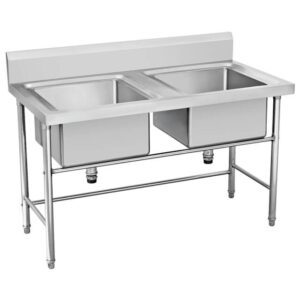
Sink with 2 Bowls 1200x700x85
Code: GN20ST0656
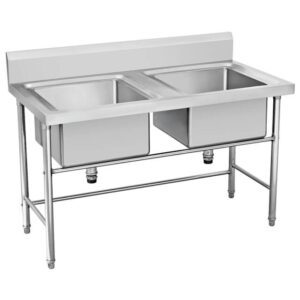
Sink with 2 Bowls 120x60x85
Code: GN10280
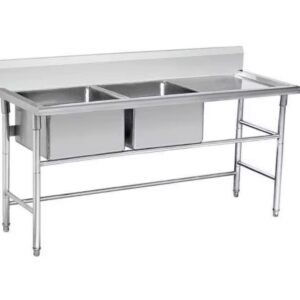
Sink with 2 bowls+table 180X70X85
Code: GN10381
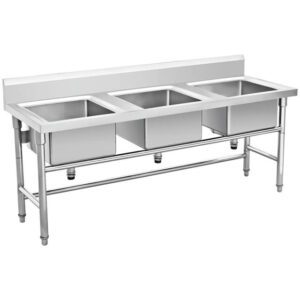
Sink with 3 Compartments 175x60x80
Code: GN20ST0485
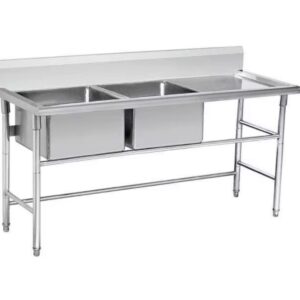
Sink with 2 bowls+table 150X60X85
Code: GN10380
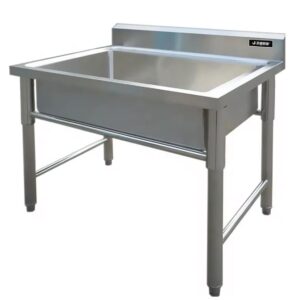
Sink with 1 bowl 95X75X85
Code: GN10376
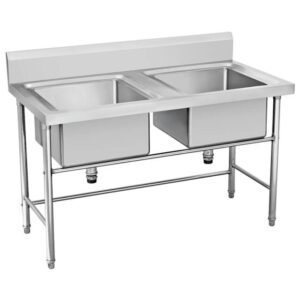
Sink with 2 Bowls 120x70x80
Code: GN10279

Sink with 1 Bowl 600x600x850
Code: GN10277
5. Space Management: Shelving and Wall Shelves
Floor space in an industrial facility is a valuable resource. Efficient management involves making the most of vertical space. Stainless steel storage systems must meet the criteria of strength and ease of cleaning.
5.1. Stainless metal racks
A rack is a free-standing structure with multiple shelves (usually 4-5 shelves).
- Full (smooth) surface racks (e.g. GN10309 – 180X50X155; GN10307 – 120X50X155): Such racks are used in warehouses for dry products (flour, sugar, canned goods), as well as for storing small inventory. The smooth surface prevents liquids or loose materials from falling onto the lower shelves in case the product on the upper shelf is damaged.
- Wire Shelving (eg: GN10306 – 1822X457X1550; GN10304 – 1215X457X1550): This is a specific purpose inventory, the main advantage of which is 100% air circulation. Wire shelving is indispensable in walk-in coolers and walk-in coolers, where cold air must be evenly distributed over all products. In addition, in the washing area, they are used for quick drying of clean pots and containers. Such shelving does not collect dust.
5.2. Wall shelves
The empty wall above worktops and sinks is an ideal place to install wall shelves.
- Dimensions (e.g. GN10315 – 150X30X40; GN10310 – 100X30): The standard depth is 30 centimeters, which is optimal so that the shelf does not interfere with the cook standing below.
- Purpose: Ideal for storing spices, small gadgets, clean cloths, or plates ready for service directly in the work area.
6. Logistics and mobility: professional carts
In a restaurant, time is money. Carrying products and utensils by hand not only slows down the process, but also increases the risk of damage. Mobile inventory is a key tool for optimizing processes.
- Service trolley with 3 shelves (eg: GN10378 – 102x50x97; GN10317 – 850X450X900): used both for serving dishes in the hall (or for serving banquets), and for quickly removing dirty dishes from tables. The multi-level system allows for the transportation of large volumes of cargo in one pass.
- Laundry cart (eg: GN10377 – 90X63.5X78): A sturdy frame designed to accommodate special baskets. It transports clean, wet dishes from the washing area to the operating areas and vice versa.
- Tray trolley (so-called “shpilka”) (e.g. GN10316 – 60X40): Critically important for pastry shops and bakeries. 60×40 cm is the Euronorm standard for baking trays. Such a trolley can accommodate 15-20 trays, which simplifies the delivery of baked goods to the oven and subsequent cooling of hot products with minimal space requirements.
The main feature of these carts is their polyurethane swivel wheels, which move silently, leave no marks on the floor, and are equipped with brakes for secure fixation.
7. Specialized stands (Inoxclass series)
Heavy and vibrating equipment, such as professional ovens, requires a rigid, solid base. Placing them on a simple workbench is dangerous.
- Pizza oven stand (e.g. ICT06 – 92×62; ICT05 – 62×62): Pizza ovens are quite heavy (especially due to the chamotte stones) and operate at high temperatures. A special stand ensures ideal weight distribution and fixes the device at an ergonomic height so that the baker can easily control the process.
- Convection oven rack (e.g. ICT01): Often equipped with special rails for storing baking trays (gastroemcosts) directly under the oven. This minimizes the chef’s movement area and increases work speed.
8. Inventory operation, maintenance and HACCP standards
Although the term “stainless steel” indicates its rust-free nature, improper handling can destroy the protective layer (passivation) and cause metal degradation (pitting corrosion). To protect your investment and ensure food safety, the following strict regulations must be followed:
8.1. Chemical restrictions
- Chlorine and bleach are prohibited: Cheap detergents containing sodium hypochlorite are deadly for stainless steel. They quickly erode the chromium oxide layer, causing micro-cracks and darkening/rusting of the surface.
- Acids are prohibited: Strong acidic cleaners damage the metal structure.
- Recommended: Use only professional, pH-neutral detergents. Alkaline-based, non-greasy cleaners are best for removing grease.
8.2. Physical cleaning rules
- When cleaning mechanically, never use metal scouring pads (so-called mesh) or coarse abrasive powders. They scratch the surface. Bacteria can then accumulate in the scratches and make disinfection more difficult. Use only soft microfiber cloths or special synthetic sponges.
- Cleaning technique: Pay attention to the direction of the steel texture (grain direction). Always clean parallel to the lines and not in circular motions to avoid damaging the surface appearance.
8.3. Daily routine and drying
- At the end of the shift, all workbenches, sinks, and wall shelves should be washed with warm water and appropriate chemicals.
- The most important stage – drying: After completing the wet processes, the inventory must be dried with a clean cloth. After the evaporation of water droplets (especially hard water), a mineral precipitate (calcium) remains, which damages the steel over time.
9. Planning and Return on Investment (ROI)
Purchasing professional stainless steel inventory is a significant capital investment, but its proper planning ensures a high return on investment (ROI) due to the following factors:
- Long service life: With proper care, the equipment (tables, sinks, racks) in the GN Industrial range can serve the business for 10+ years without the need for replacement or repair.
- Staff efficiency: An ergonomically designed space (appropriately height tables with shelves, mobile carts) reduces staff physical fatigue and unnecessary movements, which directly increases work speed and meal delivery rate.
- Prevention of sanitary fines: Stainless steel inventory that meets international standards completely eliminates infrastructure fines from the National Food Agency (or other controlling body).
- Reduced maintenance costs: Cleaning smooth and hard surfaces requires less time and less expensive chemicals.
The heart of any restaurant, hotel or catering facility is its kitchen, and for this heart to function properly, it is vital to create the right infrastructure. The selection of professional equipment should not be based solely on price; the main criteria are the quality of the metal, the strength of the structure, and compatibility with the technological processes of the facility.
GN Industrial (gn.ge) provides customers with top-class products — a wide catalog of workbenches, sinks, wall shelves, racks and carts. A variety of sizes and configurations (from 120 cm to 200 cm, with different shelf layouts and number of bins) allows you to master your space with centimeter accuracy, create a safe, fast and hygienic working environment that will fully meet the demanding requirements of the modern HoReCa business. Solid infrastructure is the foundation of a stable business.