 KA
KA EN
EN RU
RU

 Back to Blog
 June 25, 2026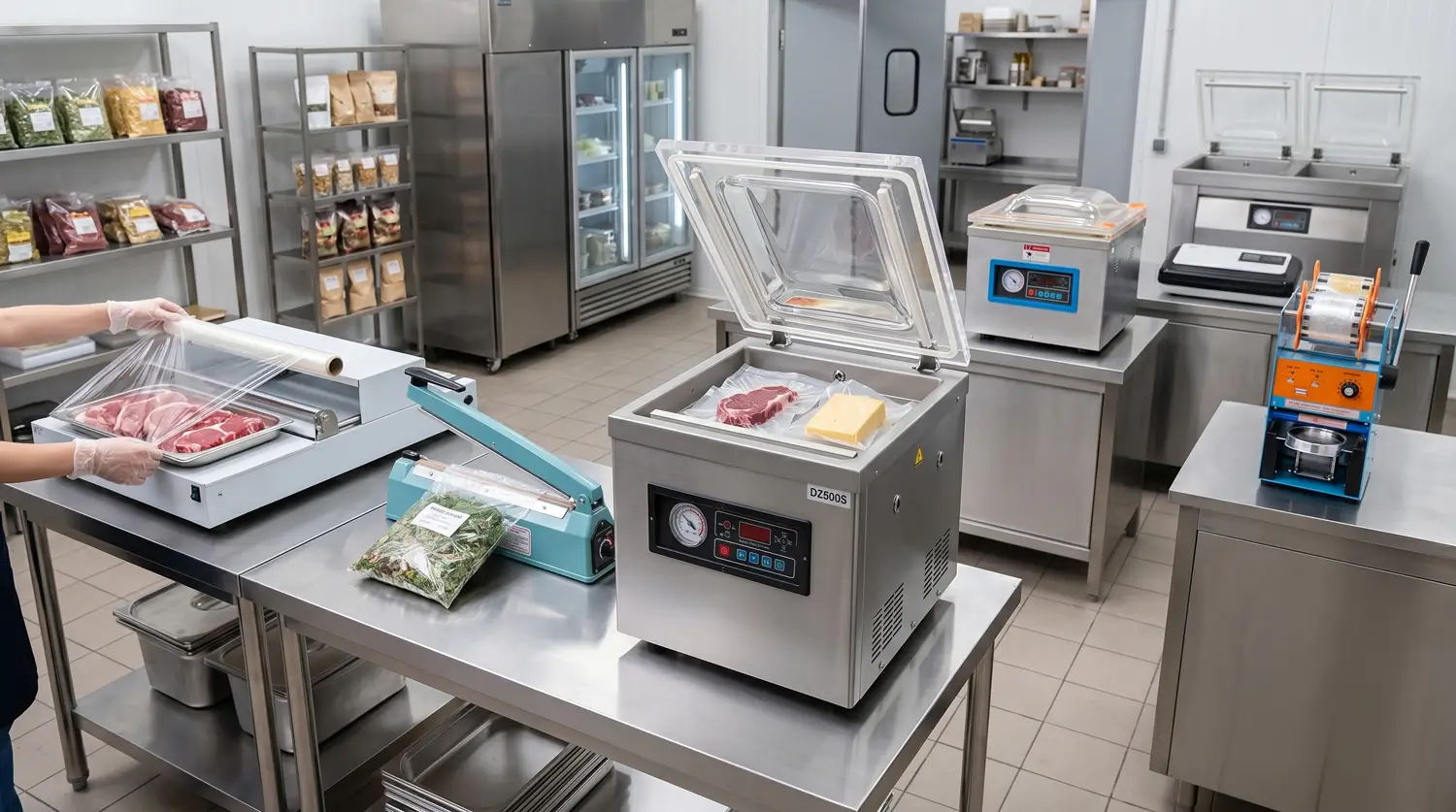
In the modern food industry, commodity production and HoReCa sector, product packaging is a critically important technological process. Properly selected packaging equipment directly affects the extension of product shelf life, the preservation of organoleptic properties (taste, smell, color), transportation safety and compliance with international sanitary standards of HACCP (Hazard Analysis and Critical Control Points).
GN Industrial (gn.ge) offers a wide range of industrial and semi-industrial packaging equipment. This technical overview will help you understand the operating principles of various types of equipment, their characteristics, and select the optimal models for your business.
1. Technological classification: packaging types and their purpose
Several basic packaging methods are used to process food and non-food products, each of which requires its own specific technical equipment:
- Evacuation Packaging: The process involves completely pumping out all air (and therefore oxygen) from the package and sealing it hermetically. The absence of oxygen inhibits the growth of aerobic microorganisms and bacteria, prevents the oxidation of fats, and prevents the product from drying out.
- Impulse Sealing: Used for fast, thermal sealing of finished cellophane, polyethylene (PE) or polypropylene (PP) packages. The machine operates with a short-term electronic pulse that melts the material and creates a strong, hermetic seam.
- Stretch Film Wrapping / “Hot Tables” (Cling Film Wrapping): Mainly used for placing semi-finished products, meat, fruits and vegetables on polystyrene trays (substrates). The film adheres tightly to the product, and a thermal knife and hot platform ensure its fixation.
- Cup/Tray Sealing: Thermal sealing of liquid, pasty, or bulk products with a special protective film, which eliminates liquid spillage during transportation.
2. Vacuum Apparatus: In-depth Analysis of Chamber Models
Vacuum machines are an essential component of industrial kitchens and factories. The GN Industrial catalog presents professional chamber-type devices, which are divided into three main categories: tabletop (compact), floor-standing (single-chamber) and two-chamber (high-performance) models.
2.1. Tabletop vacuum machines
Designed for small and medium-sized facilities, such as cafes, restaurants, small butcher shops and markets. They are characterized by compact dimensions, but have powerful vacuum pumps.
- DZ260T (Code: DZ260T): The most compact model, ideal for kitchens with limited space and for preparing dishes using Sous-Vide technology.
- DZ300T and DZ400T (codes: DZ300T, DZ400T): Equipped with a 30 cm and 40 cm wide heating bar, respectively. The length of the heating bar determines the maximum width of the package. The DZ400T model allows several small packages to be placed in the chamber at the same time, which increases work efficiency.
2.2. Floor-Type Single Chamber Machines
These machines are designed for intensive, daily work in medium and large enterprises, catering establishments and hypermarkets.
- DZ400S and DZ500S (codes: DZ400S, DZ500S): have a deep working chamber and a solid floor construction with wheels, which ensures their mobility. The DZ500S is characterized by a 50 cm sealing strip, which allows vacuuming of large anatomical pieces (for example, a whole back of cattle or a shank).
2.3. Double Chamber Industrial Equipment
High-performance machines where the work process is continuous. While one chamber is pumping out air and sealing, the operator assembles the next packages in the second chamber.
- DZ400/2C and DZ500/2C (codes: DZ400/2C, DZ500/2C): Equipped with high-performance industrial vacuum pumps. They are used in meat processing plants, fish processing plants and large storage facilities, where continuous packaging of hundreds of kilograms of products per hour is required.
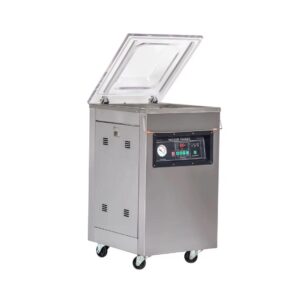
Vacuum Packaging Machine Dz400s
Code: DZ400S
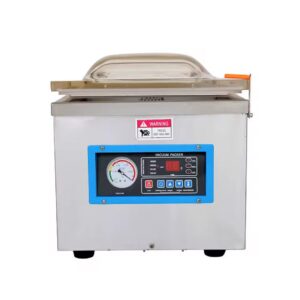
Vacuum Sealer Dz260t
Code: DZ260T

Vacuum Sealer Dz400t - 40 Cm Sealing Width
Code: DZ400T
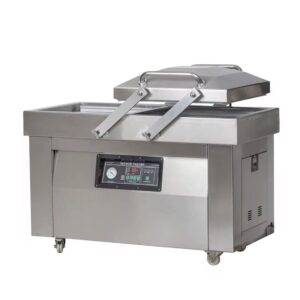
Vacuum machine DZ500/2C
Code: DZ500/2C
3. Cellophane Impulse Sealing Machines (SF Series)
Manually operated impulse sealers are the most economical and practical solution for packaging dry, bulk, confectionery or non-food products.
3.1. Working principle and construction
The devices do not consume electricity in standby mode. Heating occurs only when the lever is lowered, when the microswitch closes the circuit and a high-power current passes through the nichrome tape (Heating wire). A special Teflon sheet protects the package from direct burning and ensures the formation of a smooth, solid seam. The devices have a thermal pulse time regulator (potentiometer), which allows the device to adapt to materials of different thicknesses (microns).
3.2. Differentiation of models by length
- SF-200 (code: SF200): Sealing length 20 cm. Best for small packages (spices, tea, nuts, dried fruits).
- SF-300 (code: SF300): Sealing length 30 cm. Universal model for medium-sized packaging.
- SF-400 (Code: SF400): Sealing length 40 cm. Used for sealing large volume packages (cereals, sugar, flour, coffee).
4. Stretch film wrapping machines (“hot tables”)
For retail supermarkets, culinary shops, and manufacturers of semi-finished products, the “hot table” is an indispensable tool. It allows for aesthetic and hygienic packaging of products.
4.1. Functional features
The machine consists of film holding rollers, a thermal knife (which cuts the stretch film to the desired length), and a hot surface (platform). When the operator wraps the film around the tray, he places it on the hot platform – the ends of the film instantly melt, shrink and firmly fix it to the bottom of the tray.
- HWM-430 (Code: HWM-430): Designed for stretch films up to 43 cm wide. It is compact and fits perfectly on the workbenches of small workshops.
- HWM-550 (Code: HWM-550): An extended model that works with tapes up to 55 cm wide. Essential for packaging large trays and culinary products.
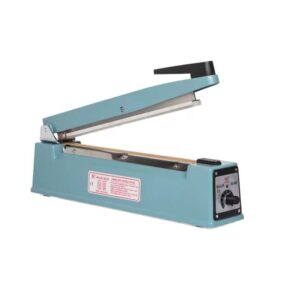
Cellophane sealing machine SF-200
Code: SF200
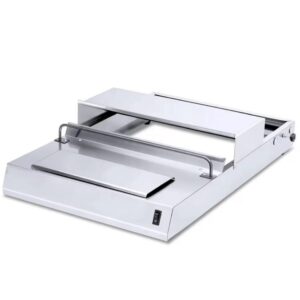
Wrapping Machine HWM-430
Code: HWM-430

Plastic Sealing Machine SF-400
Code: SF400
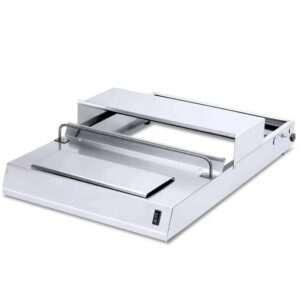
Packaging Machine HWM-550
Code: HWM-550
5. Specialized equipment: cup sealing machines
The growth of the take-away and delivery sector has dramatically increased the demand for specialized packaging equipment. The cup sealing machine is one of the leading products in this industry.
- HCS-203 (Code: HCS-203): This machine is used for heat sealing plastic and paper cups with a special roll film. It is used to hermetically seal juices, coffee, soups, sauces and other liquid products. Unlike plastic caps, the heat-sealed film 100% eliminates liquid spillage during courier transportation, which increases customer satisfaction and protects the brand’s reputation.
6. Technical comparison and selection criteria
The selection of the right packaging equipment should be based on the scale of production and the physical characteristics of the product. Below are the main selection criteria:
| Criterion / need | Recommended technology | Examples of working models |
| Maximizing shelf life (meat, cheese, fish) | Chamber vacuum machines | DZ400T (desktop), DZ500S (floor) |
| Dry and loose products (tea, coffee, cereals) | Manual impulse seals | SF-200, SF-300, SF-400 |
| Fast visual packaging on a tray (semi-finished products, fruits) | Hot tables (with stretch film) | HWM-430, HWM-550 |
| Delivery of liquids, sauces and drinks | Thermal sealing of the glass | HCS-203 |
| High industrial performance, continuous cycle | Two-chamber vacuum devices | DZ400/2C, DZ500/2C |
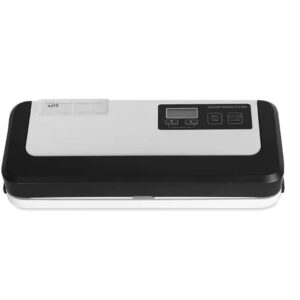
Vacuum machine GNV30
Code: GNV30

Cup Sealing Machine HCS-203
Code: HCS-203

Vacuum Sealer Dz300t – 30 Cm Sealing Width
Code: DZ300T

Cellophane Sealing Machine SF-300
Code: SF300
7. Operation, maintenance rules and technical regulations
For long-term and uninterrupted operation of packaging equipment, it is necessary to strictly follow the maintenance rules established by the manufacturer.
7.1. Vacuum equipment maintenance (pump system)
The heart of the vacuum machine is its rotary-disc vacuum pump, which runs on a special oil.
- Oil control and change: The oil level and color should be constantly checked in the indicator (sight window) on the rear or side panel of the machine. If the oil becomes cloudy, dark or milky (which indicates moisture ingress), it should be changed immediately. It is recommended to change the oil after every 120-150 operating hours.
- Chamber hygiene: At the end of the working day, the chamber should be cleaned with a damp cloth. It is not allowed to leave liquid on the bottom of the chamber, as the pump may suck this liquid in during vacuuming, which will cause mechanical damage to the pump (water hammer or corrosion).
7.2. Maintenance of impulse seals and hot tables
- Replacing Teflon Tape and Nichrome: The Teflon protective strip in SF series devices wears out and thins over time. If you notice that the package is starting to stick or the quality of the adhesive has deteriorated, you need to replace the Teflon and the nichrome wire underneath it (which are included in the device’s repair kit).
- Cleaning hot blades and platforms: Over time, burnt film residues accumulate on the thermal blade of HWM series machines. They should be cleaned with a special wooden or plastic scraper when the blade is warm (not hot). The use of metal objects is strictly prohibited, as they will damage the Teflon coating of the blade.
8. Economic efficiency and return on investment (ROI)
Establishing a professional packaging line for a business is a strategic investment step that quickly reflects on financial performance:
- Reduce food waste (spillage): Vacuum technology increases product shelf life by 3 to 5 times. This allows restaurants and businesses to optimize purchasing, purchase raw materials in large batches (at a lower cost), and minimize write-offs of spoiled products.
- Expansion of transit and logistics scope: Hermetic packaging allows the manufacturer to safely transport its products over long distances, supplying them to regional chains and supermarkets, which was previously impossible due to the rapid spoilage of unpackaged products.
- Labor optimization: Automated and semi-automated machines (for example, dual-chamber vacuums or rapid sealers) dramatically reduce the time spent on packaging, allowing fewer personnel to perform the same amount of work.
A packaging machine is not just a supporting tool — it is a guarantee of product quality, brand image, and logistics chain security. When selecting a machine, preference should be given to solid industrial construction, reliable electronics, and high-performance components.
GN Industrial (gn.ge) offers a full range of packaging equipment for businesses of all sizes. From high-tech vacuum machines to compact impulse sealers, our products ensure the efficiency of your production process, strict adherence to HACCP standards, and the ideal presentation of your products on the market.