 KA
KA EN
EN RU
RU

 Back to Blog
 September 21, 2026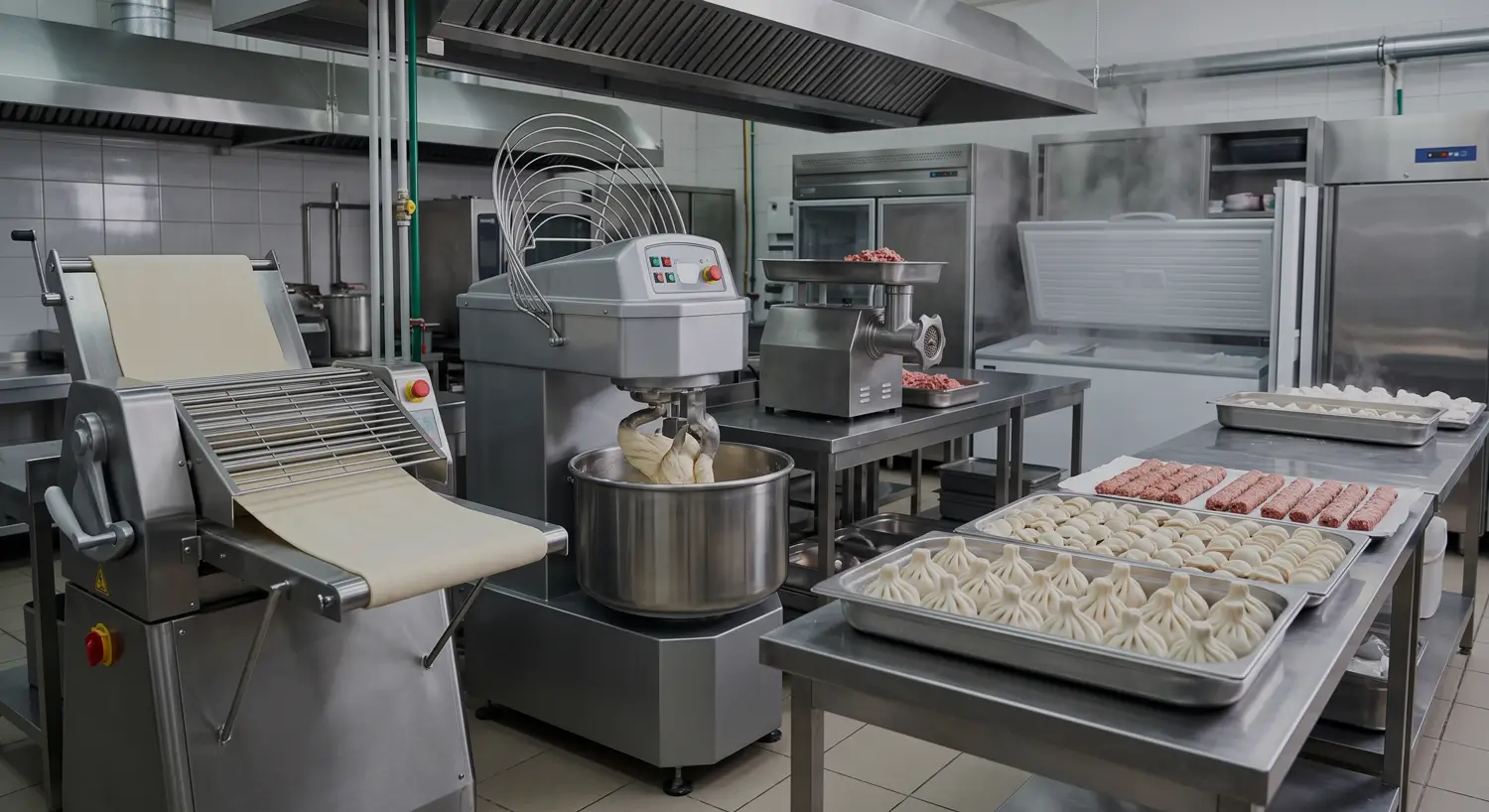
In today’s fast-moving world, consumer behaviour has changed radically. People have less and less time to prepare full meals at home, and that has created unprecedented demand in the market for semi-finished (frozen) products . Khinkali, pelmeni, kebabs, pancakes and cutlets — these are the products found today in the fridge of every supermarket and in every family’s freezer.
Competition in this market, however, is enormous. Customers want a “homemade” taste, a perfect shape and the highest quality. Reaching that standard and, above all, holding it steady in large-volume production is impossible without properly chosen professional equipment.
If you are planning to open a semi-finished food production facility or to expand an existing business, this large article is exactly for you. GN.GE’s experts will take you through every stage of production in detail, and through the industrial equipment that will make your business a success.
Stage 1: preparing the dough — why is a spiral mixer essential?
The dough for khinkali, pelmeni and vareniki has one common, difficult characteristic — it is dense and low in hydration. Kneading such a dough by hand is physically extremely hard, while standard (planetary) baking mixers cannot withstand that load and soon break down.
And this is where one machine becomes indispensable — the spiral mixer.
What makes spiral mixers special, and their advantages:
In a spiral mixer both the spiral tool (the hook) and the bowl rotate at the same time. This double rotation saturates the dough with oxygen perfectly and forms the gluten network correctly. The result is an elastic, uniform mass that does not tear when rolled out.
- For small and medium producers: At the start, compact spiral mixers with a capacity of 21 to 35 litres running on a standard 220V (single-phase) supply are ideal. They take up little space but fully meet the demands of a young production line.
- For large producers: As production grows, powerful units with a capacity of 40, 54, 64 or even 80 litres become necessary. High-capacity mixers (80 litres, for example) normally run on a 380V (three-phase) supply, which keeps the motor stable and allows a continuous working cycle with no overheating.

Spiral mixer H20 – with 21 liter bowl
Code: H20
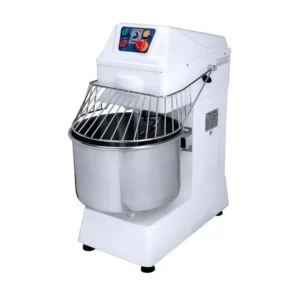
Spiral mixer H30 – with 35 liter bowl, 220V
Code: H30

Spiral mixer H40 – with 40 liter bowl, 220V
Code: H40

Spiral mixer H50 – with 54 liter bowl and 220V power supply
Code: H50
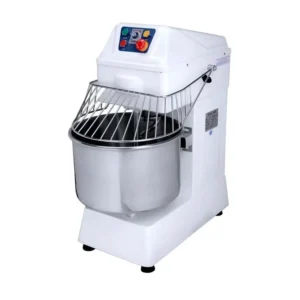
Spiral mixer H60 – with 64 liter bowl, 220V
Code: H60
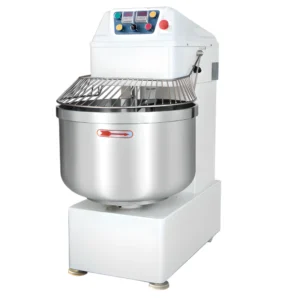
Spiral mixer H80 – with 80 liter bowl, 380V
Code: H80
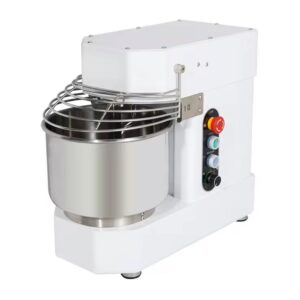
Spiral mixer S10
Code: S10

Stage 2: processing the minced meat — the main secret of success
Meat is the heart of semi-finished products. The flavour of kebabs, khinkali and cutlets depends directly on how the meat was minced. Non-professional grinders “crush” the meat, which makes it lose its juices. A professional meat grinder, by contrast, cuts it cleanly.
What should you pay attention to when choosing a meat grinder?
- Output (kg per hour):
- For small workshops, models with an output of 120 to 220 kg per hour are entirely sufficient.
- For medium and large producers (where mince is made by the tonne), powerful industrial machines with an output of 350 to 700 kg/h are essential (size #32 or #42, for example).
- The reverse function: This is critically important. If sinew wraps around the shaft, the reverse button turns the motor backwards and frees the mechanism in seconds, without dismantling the machine.
- A removable head (the HACCP standard): Under modern food-safety requirements, the part of the grinder the meat passes through has to come off easily, so that at the end of the working day it can be fully disinfected and washed in the sink.
- A meat grinder with a cooling system (a revolution in quality): At high output (700 kg/h, for instance) friction heats the grinder head up. Heat breaks down the protein in the meat, the mince loses colour, turns grey and bacteria multiply in it quickly. Meat grinders with a cooling system hold a low temperature (4-8°C) throughout the cutting process. The mince comes out perfectly red, keeps its texture and its shelf life increases noticeably. This matters especially in producing premium-class kebabs and khinkali.
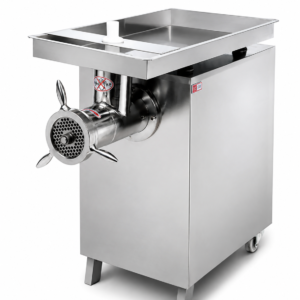
Professional meat grinder 650kg/h TC-42
Code: TC-42
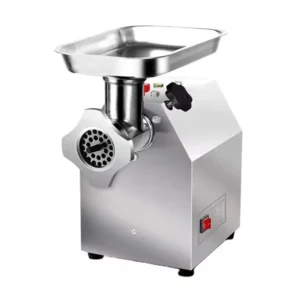
Meat grinder 120kg/h with removable head and reverse TC-12
Code: TC-12
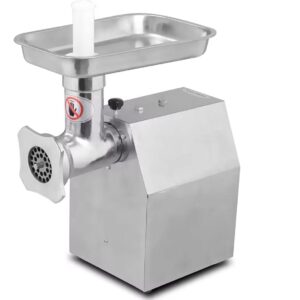
Meat grinder 120kg/h with removable head and reverse TT-12
Code: TT-12
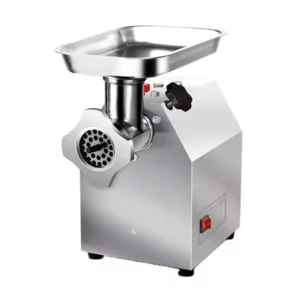
Meat Grinder 220kg/h with Removable Head and Reverse TC-22
Code: TC-22
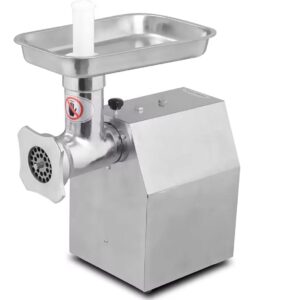
Meat grinder 220kg/h with removable head and reverse TT-22
Code: TT-22

Meat grinder DMS-32 700 kg/h.
Code: GN1077
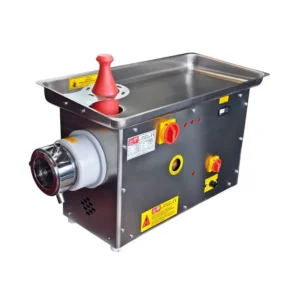
Meat Grinder with Cooling #32 700 Kg/H
Code: GN10129
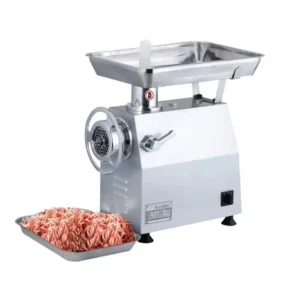
Meat Grinder with Removable Head 250kg/H TC-22T
Code: TC-22T
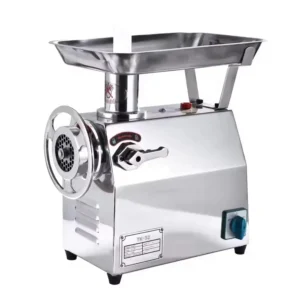
Meat Grinder with Removable Head 350 Kg/Hour TC-32T
Code: TC-32T
Stage 3: rolling and forming the dough — speed and standardisation
Rolling dough by hand is the most labour-intensive process and the one that limits production volume. Professional dough rollers roll the dough to an even thickness with micron precision.
- Universal dough rollers: Used for pelmeni as well as for pizza and other flour products. They roll the dough in two stages, which stops it tearing.
- Dough rollers made specially for khinkali: These machines are built for firm dough in particular. Small-diameter rollers (180 mm, 200 mm, 220 mm, 240 mm) let the operator feed in cut dough balls and receive, within seconds, perfectly round sheets of even thickness ready for folding khinkali. This makes the folders at least three times faster.
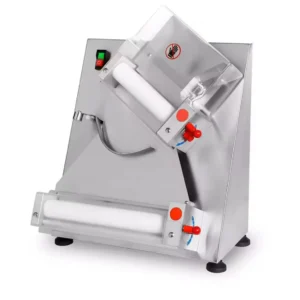
Pizza Dough Roller APD30
Code: APD30
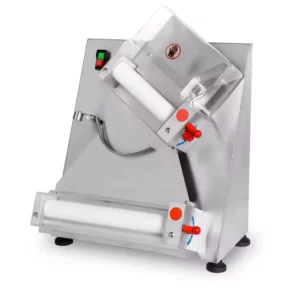
Pizza Dough Roller APD40
Code: APD40
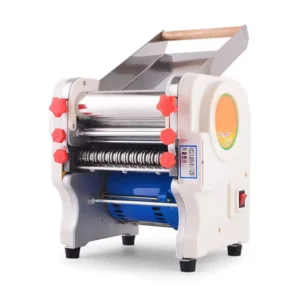
Khinkali Dough Roller HNM-240
Code: HNM-240
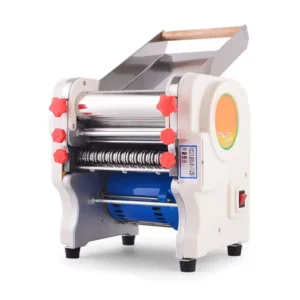
Khinkali dough rolling machine HNM-180
Code: HNM-180
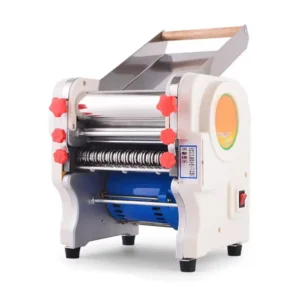
Khinkali Dough Roller HNM-200
Code: HNM-200
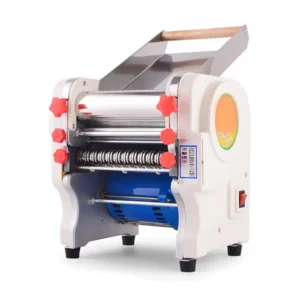
Khinkali Dough Roller HNM-220
Code: HNM-220
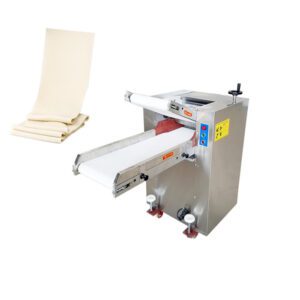
Khinkali Dough Press TDRMJ-350
Code: GN20ST6895-AU
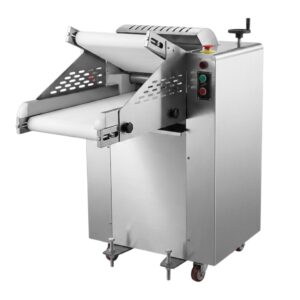
Khinkali dough press YMZD500
Code: YMZD500
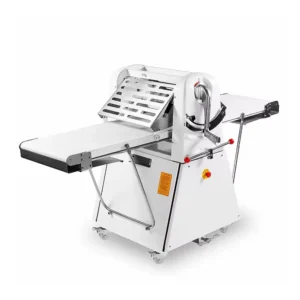
Dough Laminator LSP520
Code: LSP520
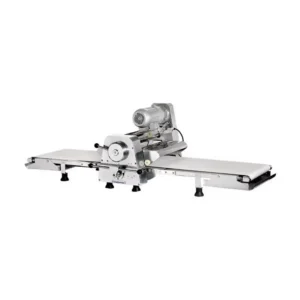
Dough Laminator TPS-520
Code: TSP520
Stage 4: freezing and storage (blast chillers and freezers)
In the production of semi-finished foods, freezing technology is just as important as the cooking itself.
If you put freshly folded khinkali or pelmeni into an ordinary freezer cabinet (-18°C), the freezing process stretches out over 10-12 hours. During that slow process the water in the meat and the dough forms large ice crystals. Those crystals tear the cell membranes. As a result, when the customer boils the product, the khinkali splits, the juices run out and the meat loses its structure.
Blast chillers / shock freezers
This is a machine every serious producer needs. A blast chiller delivers extremely cold air (-35°C to -40°C) to the product at high speed.
- The result: The product freezes to the core in just 30-45 minutes.
- The effect: The water forms micro-crystals that do not damage the cell structure of the product. After boiling, shock-frozen khinkali is absolutely indistinguishable in taste, juiciness and texture from freshly folded khinkali.
After shock freezing, the product is packed and moves into standard freezer cabinets or chest freezers (-18°C to -24°C) for long-term storage and preparation for sale.
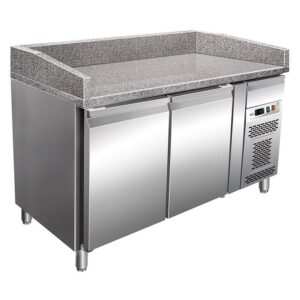
2-door table refrigerator with granite top PZ2600TN
Code: PZ2600TN
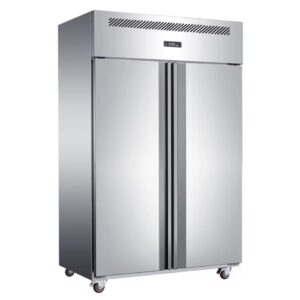
Vertical refrigerator with 2 doors 1476 lt. SP1410TN
Code: SP1410TN
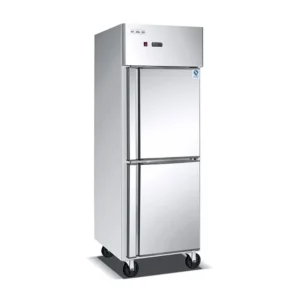
Vertical refrigerator KD0.5F – 550 liters
Code: KD0.5F
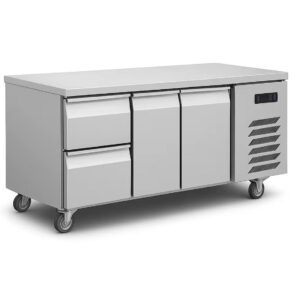
Table refrigerator SP3120
Code: SP3120
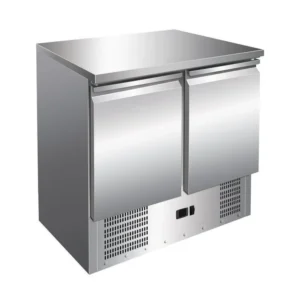
Table refrigerator with 2 doors S-901
Code: S901

Table refrigerator with 3 doors (2020X700)
Code: GN1038
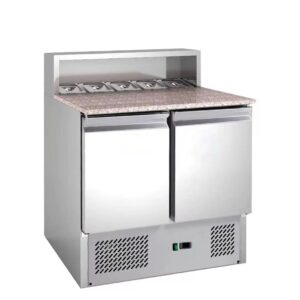
Pizza table refrigerator with 2 doors PS900
Code: PS900
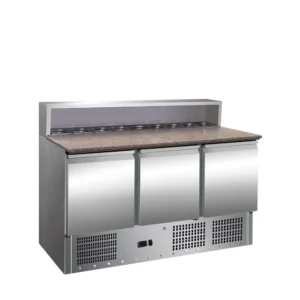
Pizza table refrigerator PS-903 – 3 doors
Code: PS903
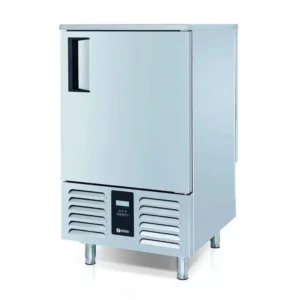
Shock refrigerator ICEINOX BLC10
Code: GN10128
Real cases (case studies)
Case #1: from a family operation to an industrial scale
- The problem: A small producer was making 5,000 khinkali a day by hand. Kneading and rolling the dough took so much time that they could no longer keep up with orders.
- The solution: The facility was equipped with a 40-litre spiral mixer, a meat grinder with an output of 220 kg/h and dough rollers made specially for khinkali.
- The result: Production volume tripled (15,000 units a day) with the same number of staff. The quality of the dough became consistent, which reduced the percentage of khinkali splitting during boiling.
Case #2: solving a premium-class problem
- The problem: A company making kebabs and burger patties had a problem — during intensive work in the summer months the mince changed colour quickly (it darkened) and the product lost its appearance.
- The solution: The producer replaced the old machine with a powerful meat grinder with a cooling system (700 kg/h output).
- The result: The cooling system kept the temperature of the mince steady while it was being cut. The product regained its perfect red colour, its shelf life grew longer and the number of items returned by the retail chains fell.
Comparison table: how to choose equipment by the scale of production?
To make planning your investment easier, here is a basic matrix:
| Type of machine | Small producer (start-up) | Medium producer | Large / industrial producer |
| Spiral mixer | 20-35 litres (220V) | 40-54 litres (220V/380V) | 60-80 litres (380V) |
| Meat grinder | 120-220 kg/h | 250-350 kg/h | 650-700 kg/h (with cooling, preferably) |
| Dough roller | Khinkali / small universal | Universal (floor-standing) | Automatic production line |
| Freezing / storage | Small blast chiller + chest freezer | Medium blast chiller + freezer cabinets | Industrial blast-freezing room |
Caring for the equipment (HACCP and technical safety)
Industrial machines call for a large investment, so extending their working life matters greatly:
- Caring for the mixer: Never wash a spiral mixer’s bowl with a direct jet of water (a hose). Water easily reaches the control panel and damages the electronics. Use damp cloths with a disinfectant solution and clean the bowl and the hook carefully.
- Hygiene of the meat grinder: At the end of every shift the removable head (the neck, the auger, the knife, the plate) must be taken off completely and washed with hot water and detergents approved for food use. After washing, the knives and plates should be dried and lightly oiled with edible oil so that they do not rust.
- Storing the roller: Keep metal objects (a knife, a scraper) away from the rollers so that the surface is not scratched. The drive chains and belts must be greased and checked periodically by a technician.
The success of a semi-finished food producer is as precise as a mathematical formula: quality raw ingredients + professional equipment = a top-class product.
To build a stable business, compromises on equipment are not permissible. A powerful spiral mixer, a meat grinder with a cooling system, a fast dough roller and a blast chiller are the foundation on which your brand’s reputation has to be built.
Plan your production properly! The team of professionals at GN.GEis ready to give you a full consultation, to select equipment matched to your budget and your output, and to provide dependable technical support.