KA
 EN
 RU




Kakhetian Shoti Bread Oven - GN302
Code: GN302
3,570.00 ₾


3-year warranty
Post-warranty service and technical support

Technical specifications
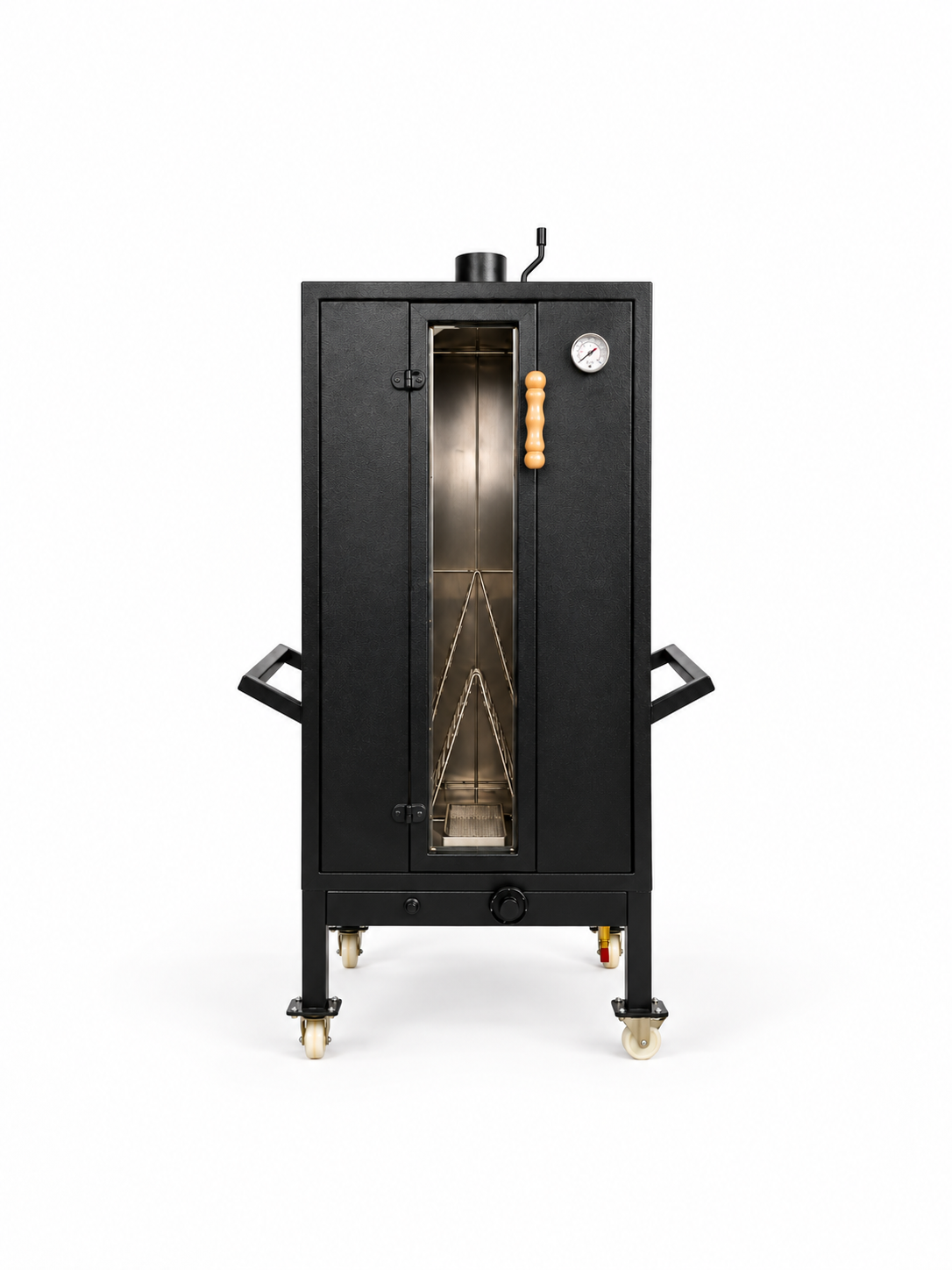
The GN301 is a Kakhetian shoti bread oven whose body has a stainless-steel interior and a metal exterior. It runs on natural gas and holds 14 loaves at a time. You can place and remove bread without leaning deep into the oven. The catalogue lists an output of 75 loaves per hour and dimensions of 75 × 75 × 154 cm. When choosing this model, consider bread demand and the workspace available at your premises, as well as the body materials.
The GN301 is designed for baking Kakhetian shoti on site, whether in a bakery, an in-store bakery department or a restaurant. The quantity of bread needed throughout the day and during peak hours is a key consideration when selecting an oven.
If you plan to bake several batches, allow time in your schedule for dough preparation, placing bread in the oven and removing it. Comparing the oven’s capabilities with your schedule helps you plan production volumes and the sequence of baking tasks in advance.
With the GN301, the baker does not need to lean deep into the oven to place or remove bread. This simplifies everyday work and is one of the oven’s main practical advantages.
A well-planned workspace is also important for making use of this convenience. The baker should have unobstructed access to the oven and room to move freely. When positioning the unit, consider how bread will be placed and removed within your particular workspace.
The oven holds 14 loaves at a time. The catalogue lists an hourly output of 75 loaves. Loaf size, the dough, baking conditions and the process of placing and removing bread all affect actual output.
The figure of 75 loaves per hour should therefore not be treated as a guaranteed result under all operating conditions. If demand rises at particular times, consult GN Industrial before purchasing to confirm whether this professional oven suits your production requirements.
The inside of the GN301’s body is stainless steel, while the outside is metal. This combination distinguishes it from the other two ovens. Before purchasing, you can confirm the steel grade, the type of exterior metal and the materials used for individual components.
For comparison, the GN300 has a stainless-steel body and the GN302 has a metal body. The catalogue lists the same capacity, output, overall dimensions and gas consumption for all three models. When choosing a model, consider the body materials, their care requirements and your working conditions.
The GN301 runs on natural gas. The catalogue lists gas consumption at 0.8 m³/h. When planning costs, take into account the current gas tariff and how the oven will be operated. Daily costs should be assessed against your working schedule.
A qualified specialist must install and connect the gas oven in accordance with the instructions. Agree on the connection requirements before purchasing so that gas pipework can be taken into account when choosing the oven’s location.
The GN301 measures 75 × 75 × 154 cm. Measure the space allocated for the oven and check the doorways and access routes through which it will be brought into your premises.
Leave space around the oven for the baker to work and for maintenance and inspection. Confirm installation, gas pipework and ventilation requirements with a specialist, referring to the instructions for the specific model.
The interior and exterior body surfaces require appropriate care. Choose cleaning products and methods in accordance with the instructions. Consult a specialist about the frequency of periodic inspections and the work required.
The oven is equipped with a safety shutoff. Refer to the technical instructions for information on its operation and use. Correct installation and adherence to the operating instructions are important for safe use.
The GN301 comes with a 3-year warranty, subject to warranty terms. Review the scope of coverage, exclusions and care requirements before purchasing.
Contact GN Industrial to compare the models. Confirm the body materials, installation and connection requirements, and the production volumes planned for your bakery.