 KA
 EN
 RU


 Back to Blog
 October 29, 2026
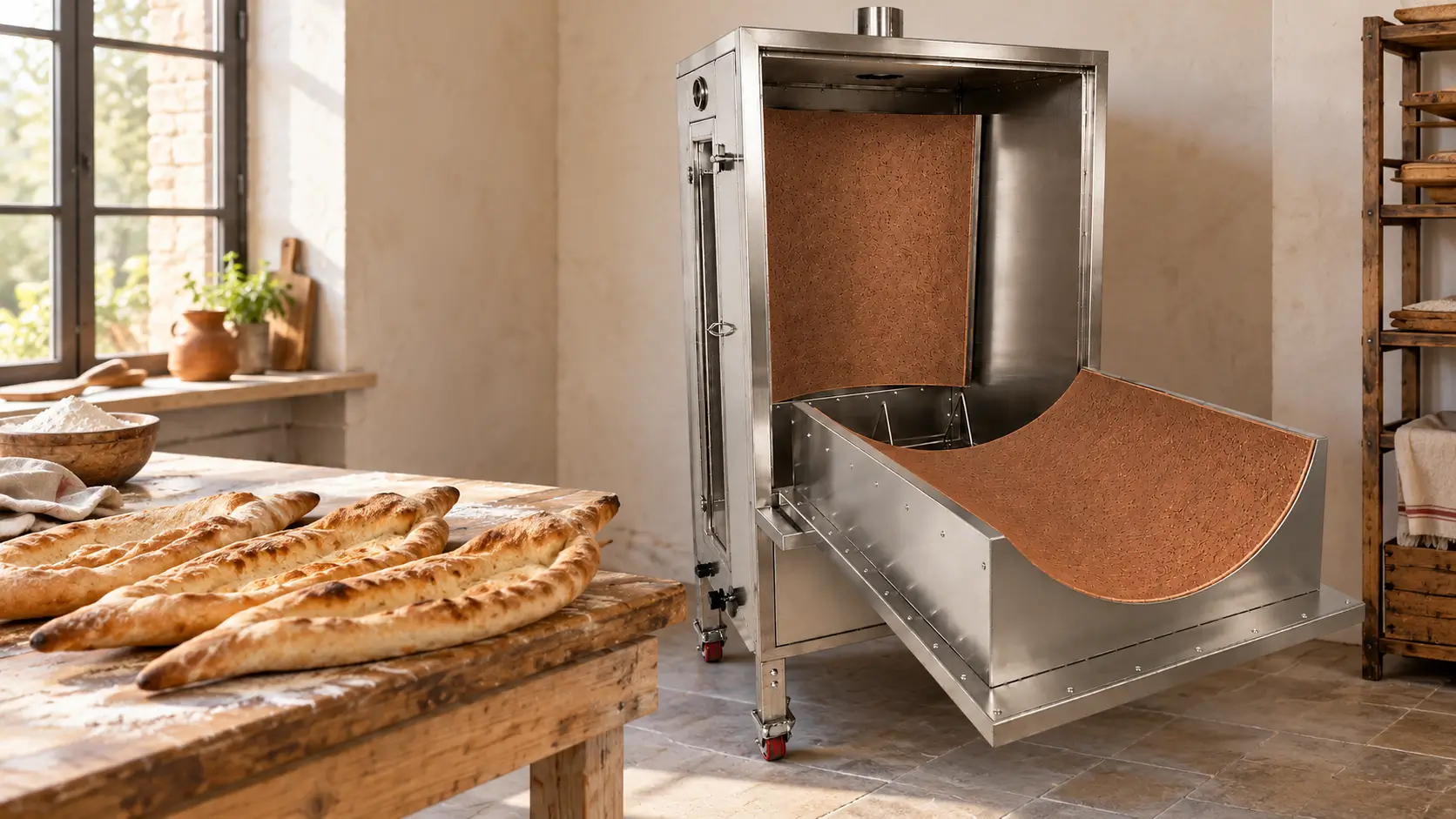
Running a bakery that makes Georgian shoti bread involves more than baking good bread. Every day, the bread needs to be ready when customers arrive, the baker needs a comfortable place to work, and production needs to be managed so that excess bread is not left at closing time. The design of the oven plays a part in all of these tasks.
A modern tone oven makes it easier to place Kakhetian shoti on the baking surface and remove it once baked. Its design allows the baker to do this without bending deep into the oven. The difference is especially noticeable when the same movements are repeated many times throughout the day.
Whether you are planning to open a shoti bakery or improve an existing operation, price is not the only consideration when choosing an oven. You also need to establish how much bread you expect to sell, how the workspace will be laid out and what the bakery will cost to run each day.
1. What is a modern tone oven for Kakhetian shoti?
A modern tone oven for Kakhetian shoti is a bread oven designed to make the baking surface easier to reach. Unlike a traditional deep tone oven, where dough is attached to the inner surface from above, these models have a baking section that opens, allowing the baker to access the surface from outside.
GN’s tone bread oven range includes three models: GN302, GN301 and GN300. All three run on natural gas and are designed for baking Kakhetian shoti. The main difference between the models is the material used for the body.
The oven provides the conditions needed for baking, but the quality of the finished bread depends on the entire process. Flour characteristics, dough hydration, kneading, proofing time and shaping all still need careful attention. Even a convenient oven cannot compensate for poorly prepared dough or unsuitable baking settings.
Before buying, ask whether you can test the oven with dough made to your own recipe. This will let you assess the bread’s crust and crumb, size and shape, as well as how well the oven suits the way your baker works.
2. Modern and traditional tone ovens: the key differences
A traditional tone oven is not necessarily wood-fired: a deep oven can also be heated by gas. When comparing ovens, it is important to distinguish the design from the type of fuel used.
The comparison below looks at a deep oven loaded from above and GN’s models with an opening baking section.
| What to compare | Traditional deep tone oven | Modern GN tone oven |
|---|---|---|
| Placing and removing bread | The baking surface is accessed from above | The opening baking section allows access to the surface from outside |
| The baker’s working position | How far the baker needs to bend depends on the oven’s dimensions and installation | Bread can be placed and removed without bending deep into the oven |
| Fuel | An individual oven may use wood or gas | GN302, GN301 and GN300 run on natural gas |
| Daily care | Depends on the design and fuel; wood-fired ovens also require ash removal | The working surfaces need cleaning and the gas equipment must be maintained according to the instructions |
| Workspace | Allow for the oven’s dimensions and the space needed to work from above | Allow space for the oven body, for opening the baking section and for the baker to move freely |
The practical advantage of a modern tone oven is most apparent in these everyday movements. The final choice depends on how well its design suits your bakery, staff and working routine.
3. Easier working access: no need to bend deep into the oven
The opening design of GN’s tone ovens allows the baker to work at the surface from outside. The photograph of the open oven shows the arrangement of the baking section and how the surface becomes accessible. The correct sequence for placing and removing bread should be learned from the equipment’s operating instructions.
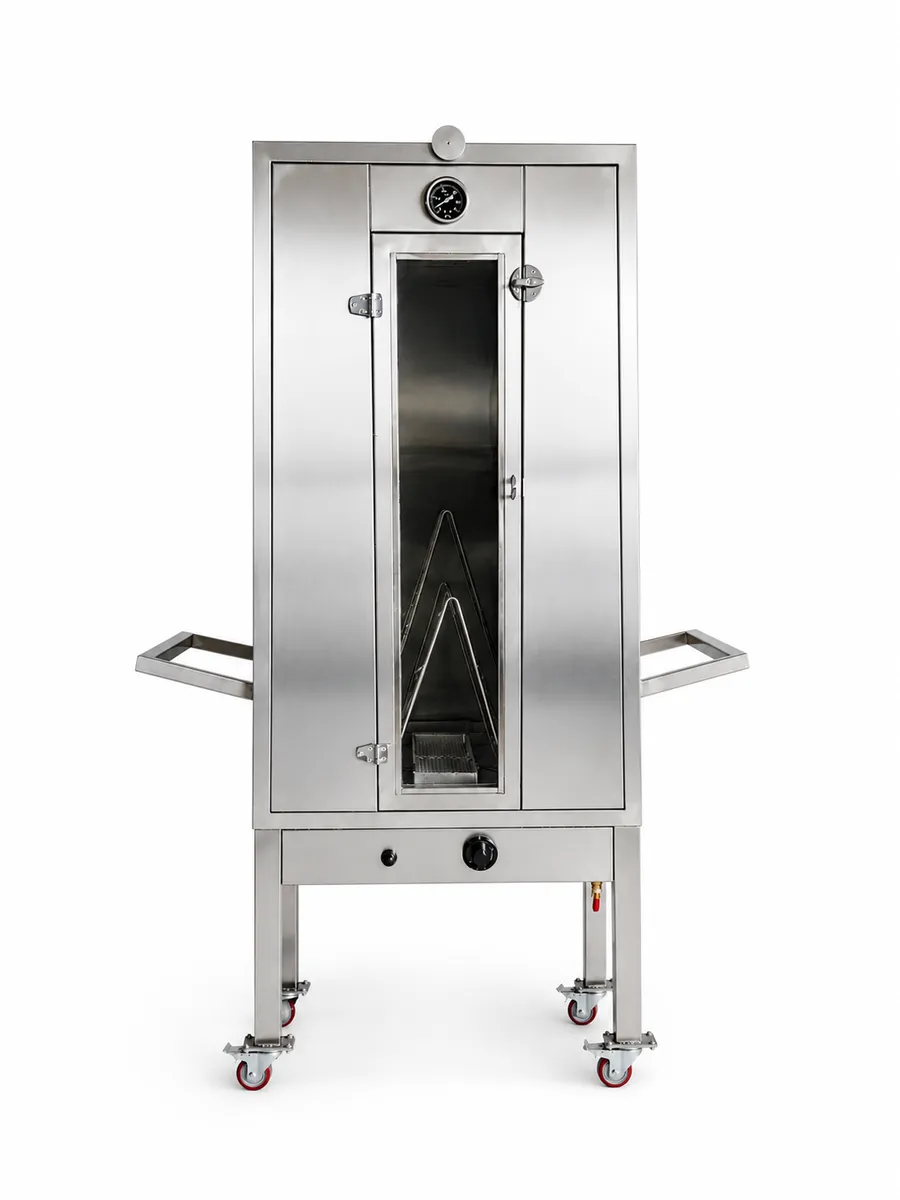
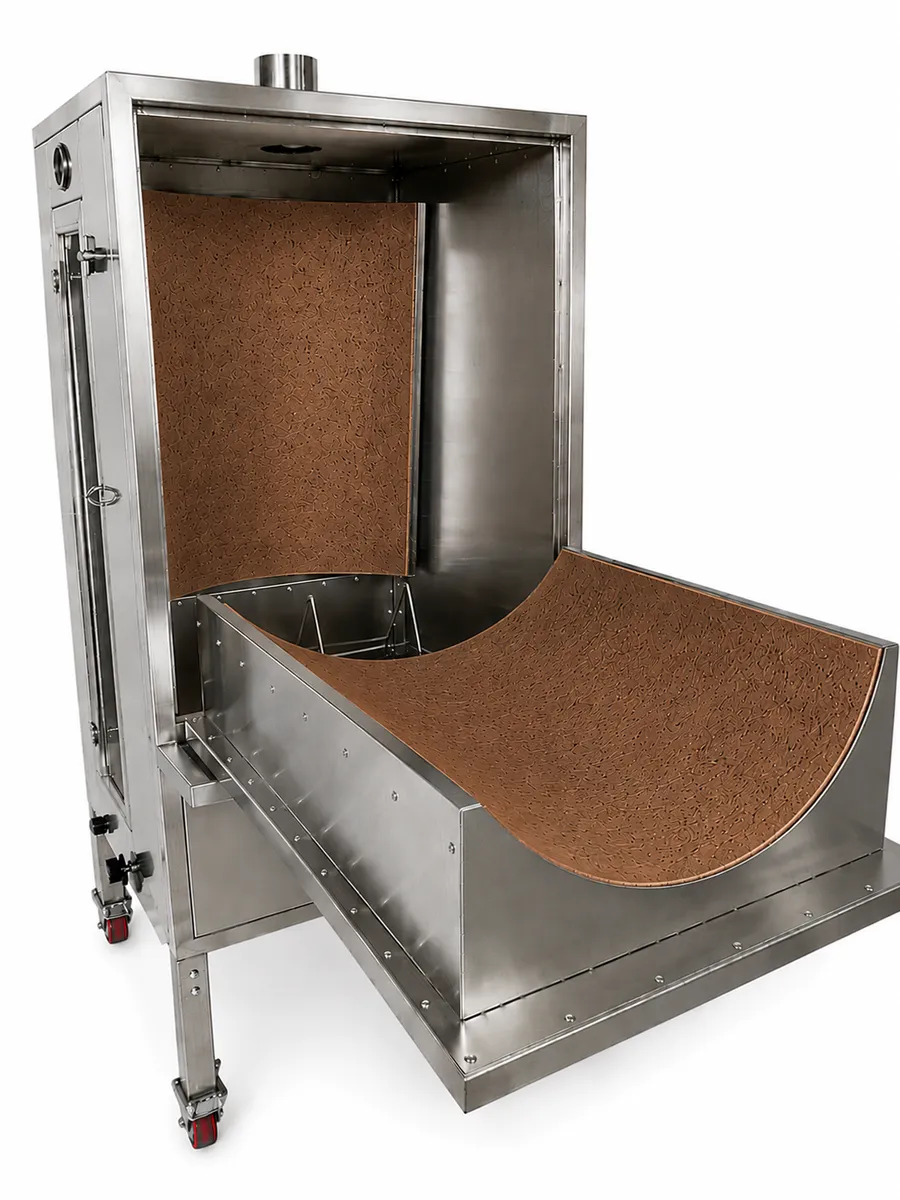
The oven in its closed and open positions. When open, the baking surface and opening section are clearly visible. Photos: GN Industrial products.
This arrangement makes repetitive tasks more convenient. However, overall ease of working also depends on other details: where the dough preparation table stands, how close the tools are and where freshly baked bread goes next. If the baker has to walk several steps or turn around for every piece of shoti, replacing the oven alone will not resolve the workflow issues.
The baker’s experience remains important. Dough must be shaped correctly, attached to the baking surface, monitored during baking and removed at the right time. Working without bending deep into the oven is more convenient, but it does not eliminate physical effort or the need for practice.
4. Which businesses can benefit from a modern tone oven?
A dedicated shoti bakery
For a standalone bakery, the key question is how much bread sells at different times of day. Morning demand, lunchtime trade and the evening flow of customers may differ considerably. The baking schedule should follow this pattern so that customers can buy fresh bread without leaving excessive stock at the end of the day.
When planning a new bakery, study the surrounding area, competitors’ offerings and customer footfall. An oven’s production capacity cannot tell you how much bread you will sell at a particular location.
An in-store bakery in a shop or supermarket
When baking on site in a shop, production needs to fit around the retail operation. Plan where ingredients will arrive, where dough will be prepared and how bread will reach the sales area without staff and customer routes getting in each other’s way.
Keeping fresh batches available at the right times is particularly important in this setting. Monitoring demand will help you see when the shop needs more bread and when smaller batches are sufficient.
A Georgian restaurant
For a restaurant, the amount of shoti baked on site should reflect guest numbers, the menu and orders. As well as the daily total, calculate how much bread you will need during the busiest hour.
Decide in advance who will prepare the dough and who will handle baking. If these tasks fall to someone who also cooks other dishes during peak service, the oven’s capacity may exceed what the kitchen can realistically manage.
A bakery supplying pre-orders
If you supply bread to shops, foodservice businesses or event organisers, the baking schedule needs to align with order deadlines. Some production can then be planned in advance, but changes to orders, packaging and delivery must also be taken into account.
Set an order cut-off time and establish the quantity you can prepare by the agreed deadline. This will help the bakery avoid taking on more work than its existing staff and equipment can deliver.

Kakhetian Shoti Bread Oven - GN301
Code: GN301
Kakhetian Shoti Bread Oven - GN300
Code: GN300

Kakhetian Shoti Bread Oven - GN302
Code: GN302
5. Planning production: how much bread to bake, and when
When choosing an oven, distinguish between three different figures:
- Batch capacity: how many loaves fit in the oven at one time.
- Hourly output: how many loaves can be baked under specified operating conditions.
- Actual sales: how many loaves your customers buy.
According to GN’s catalogue, all three models hold 14 loaves at a time and have a stated output of 75 loaves per hour. Actual results depend on bread size, dough and baking conditions. These figures are therefore a starting point for planning; you should separately assess the results achieved with your own recipe and working conditions.
A bakery’s operation consists of several interdependent stages:
Dough preparation → resting and proofing → dividing and shaping → baking → transferring and serving the bread.
If the dough is not ready when needed, the oven cannot be used to its full capacity. If bread is ready but sales are slow, increasing production will only add to the unsold quantity. When choosing dough mixers and kneaders, consider the workload across the entire process as well.
Once the bakery is operating, record how much bread you bake and sell in the morning, afternoon and evening. Track unsold bread and rejected batches separately. These records will help you plan the next day’s batches more accurately than the daily sales total alone.
When planning daily production, allow for warm-up, loading, unloading, cleaning and breaks. Simply multiplying the catalogue’s hourly output by the number of working hours will not give an accurate picture of a full day’s production.
6. What to prepare before installing the oven
Choosing a place for the oven involves more than checking its body dimensions. You also need to allow for opening it, the baker’s movements, cleaning and access for maintenance.
GN’s catalogue lists all three models at 75 × 75 × 154 cm. These dimensions help with layout planning, but they do not define the total size of the working area required.
Before buying, address the following points:
- Measure the space and the delivery route. Check doorways, corridors and the intended working area. Ask GN how much space the oven occupies when open.
- Plan the work zones. Set aside areas for ingredient storage, dough mixing and resting, shaping and baking the shoti, and serving the bread. Position the table so that everyday movements are convenient.
- Arrange the gas connection. A suitably qualified specialist should assess the existing supply and the connection requirements of the chosen model. Confirm the gas type, required pressure and connection details in advance.
- Assess ventilation. Ventilation and the system for removing combustion gases must suit the specific premises and equipment. Consult a specialist when selecting the extraction hood as well.
- Leave room for maintenance. Allow for opening the baking section, cleaning surfaces and service access. Determine the required clearances from the instructions and installation plan.
- Define the cleaning procedure. Establish in advance how each surface should be cleaned and which products are permitted. Different materials do not necessarily require the same care.
- Plan training and a test bake. The responsible employee must know how to operate, shut down and care for the equipment. Testing it with your own dough will help you select suitable baking settings; check the availability and terms of this service with GN.
When laying out the premises, position work tables and sinks to support the oven’s workflow. Convenient movement between work zones makes everyday tasks easier to organise.
7. Business costs: what to calculate beyond the oven’s price
When opening a shoti bakery, divide costs into two groups: the money needed to set it up and the cost of day-to-day operation. This makes it clearer how much you need before opening and how much future sales must cover.
Start-up costs
Delivery, moving the oven into the building, installation, the gas connection and ventilation may add to the purchase price. Budget separately for a dough mixer, work tables, scales, dough containers, shelving and the equipment needed to serve bread.
When receiving a quotation, establish exactly what is included. Purchasing an oven and setting up a fully equipped bakery involve different levels of expenditure.
Daily and monthly operating costs
Include flour and other ingredients, gas, electricity used by other equipment, water, wages, packaging, rent, cleaning and maintenance. Depending on the business model, you may also need to include delivery, bookkeeping and other administrative costs.
GN’s catalogue specifies gas consumption of 0.8 m³/h. When budgeting, relate this figure to the intended operating conditions. Clarify warm-up time and workload; recording consumption during a trial run can help you estimate actual costs.
The cost of each loaf sold
A practical calculation is to divide total operating costs for a chosen period by the number of loaves actually sold during that period.
For example, if you bake 200 loaves in a day and sell 180, use 180 as the divisor when calculating the cost per loaf sold. Total costs must still include the resources used to produce all 200 loaves. This is only an example of the calculation, not a sales forecast for a particular bakery.
Apply the same principle to rejected bread: the flour, gas and labour used to make it are already included in total costs. Record unsold stock separately so that you can reduce it, but do not count the same expense twice.
This calculation helps assess day-to-day operations. Record the initial cost of the oven and other equipment separately in your investment plan; when assessing overall business profitability, also account for those costs over the equipment’s period of use.
Low, medium and high workloads
Do not base the plan solely on the most favourable sales figures. Develop three scenarios using your own assumptions, varying bread quantities, unsold stock and working hours in each.
| Scenario | What to check |
|---|---|
| Low workload | Whether sales cover rent, staffing and other fixed costs; whether you are baking more than demand requires |
| Medium workload | How closely the baking schedule matches daily demand and how much bread remains unsold |
| High workload | Whether dough preparation, shaping and serving can keep up with increased demand; whether extra working hours or another employee are needed |
This will show which costs the bakery can cover when sales are low and where bottlenecks appear as demand rises. The oven’s purchase price alone is not enough to determine the investment payback period.
8. How to choose a GN tone oven for your business
When comparing GN302, GN301 and GN300, start with the body material you need and your budget. All three models have the same stated catalogue output, so a higher price does not in itself mean that an oven bakes more bread.
| Model | Body construction | Budget and main selection consideration |
|---|---|---|
| GN302 | Metal body | The lowest initial cost of the three models; assess the surface care requirements in your working environment |
| GN301 | Stainless steel interior, metal exterior | The mid-priced option; take the different interior and exterior materials into account when choosing |
| GN300 | Stainless steel body | The highest initial cost of the three; consider it if a stainless steel body is one of your main equipment requirements |
Care requirements depend on the particular surface. When buying, ask how to clean the body and baking section, what needs to be done daily and when servicing is required. Choosing stainless steel does not remove the need for regular cleaning and correct use.
Check prices and availability in GN’s tone bread oven range. To obtain a complete quotation, clarify the following in advance:
- what is included with the chosen model;
- how many loaves fit in one batch at your intended shoti size and weight;
- what output you can achieve with your dough and baking settings;
- the gas connection and ventilation requirements;
- the space needed for the open baking section and servicing;
- the cost of delivery, installation and any agreed additional services;
- how technical support is provided and what the warranty covers.
All three models carry a 3-year warranty subject to the warranty terms. Before buying, review the documentation for the specific oven and its installation and operating requirements.
Frequently asked questions
Can a modern tone oven bake Kakhetian shoti?
Yes. GN302, GN301 and GN300 are specifically designed for baking Kakhetian shoti. The recipe, dough preparation and baking conditions all matter in achieving the desired taste and texture. A test bake lets you assess your own bread directly.
Does a more expensive model bake more bread?
For these three models, the stated catalogue output is the same. The main difference is the body material. Compare construction, care requirements and the total purchase cost.
Can a tone oven be installed in a small shop?
That can be determined only after assessing the particular space. In addition to the body dimensions, allow for opening the baking section, dough preparation and bread serving areas, the gas connection and ventilation.
Can a beginner learn to use it?
Operating the oven can be learned, but working independently takes practice. The employee needs to learn dough shaping, attaching the bread to the baking surface, monitoring the bake, removing the bread and caring for the equipment.
Choose an oven that suits your bakery’s workflow
A modern tone oven can be a suitable choice for a business when its design supports the baker’s work, its output matches demand and the premises are properly arranged. Base the decision on your bakery’s actual circumstances: how much bread you will sell, when demand will peak and how the product will move from dough preparation to the customer.
Tell GN about your bakery format, planned daily production and premises dimensions so that you can choose a suitable oven and agree the installation requirements.
Explore GN’s ovens for Kakhetian shoti or contact us: +995 593 73 76 73 · info@gn.ge.